
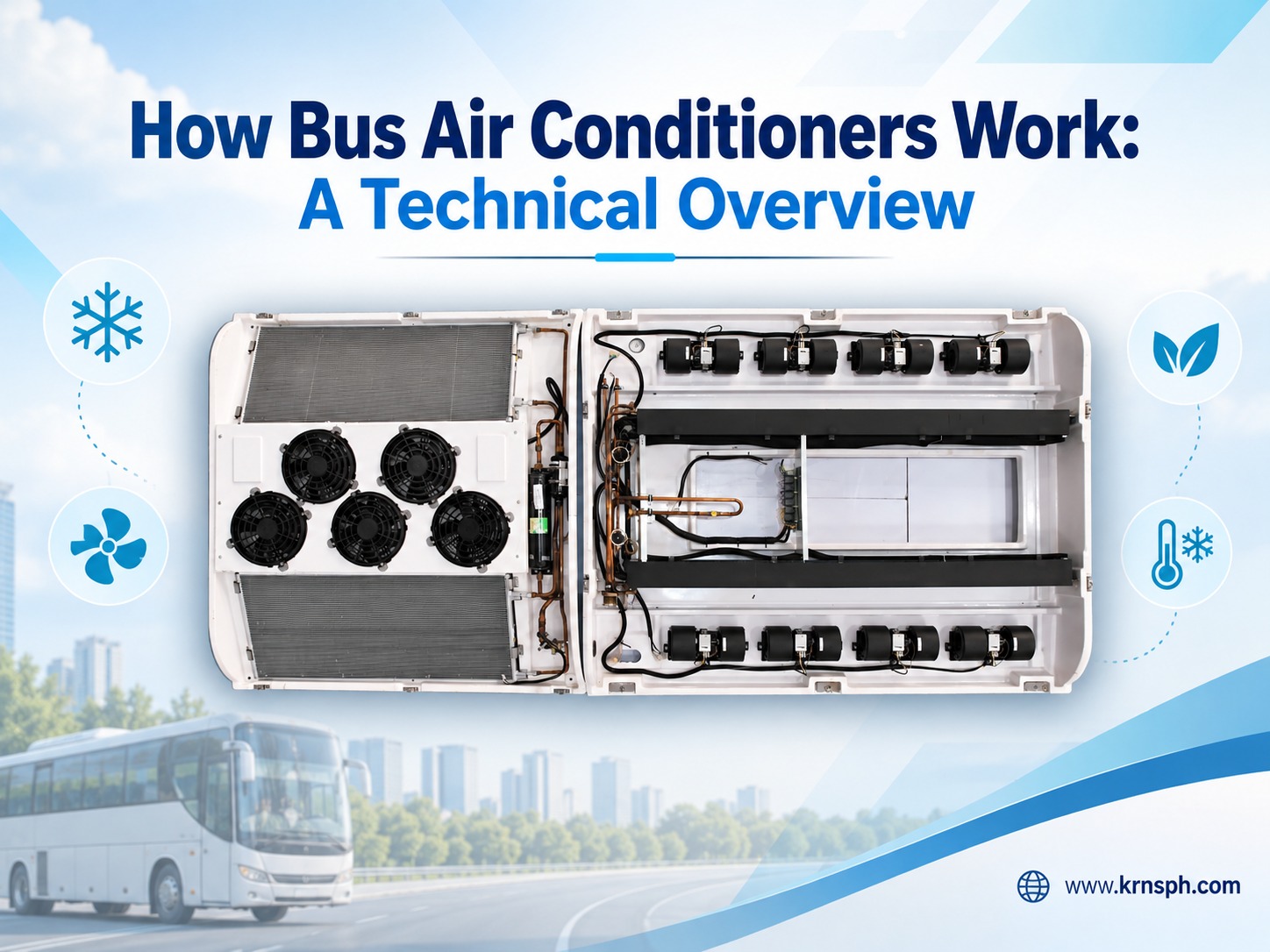
A bus AC system is meant to maintain manageable temperature levels in a spacious passenger compartment even in challenging working conditions. High passenger numbers, frequent door openings, solar heat hitting the windows, and varying outside temperatures can raise the cooling load. The system works on the same principle as the refrigeration cycle of other vehicle air conditioners. The difference is that larger heat exchangers, better compressors, more effective fans, and good air distribution are required for the cooling of the whole passenger compartment. Knowing about the working of these components helps understand how modern bus HVAC equipment achieves stable cooling.
Working of Bus Air Conditioner
The air conditioning system in a bus runs through a refrigeration cycle with four basic stages, which include compression, condensation, expansion and evaporation.
Compression
Low-pressure refrigerant gas is compressed into a high-temperature, high-pressure vapor by using the compressor. The compressor also provides the necessary pressure difference for the refrigerant’s continuous flow throughout the refrigeration system.
In the conventional IC engine bus, the compressor may be driven by the engine. In electric buses, a compressor driven by electricity from the vehicle’s electrical system is used.
Condensation
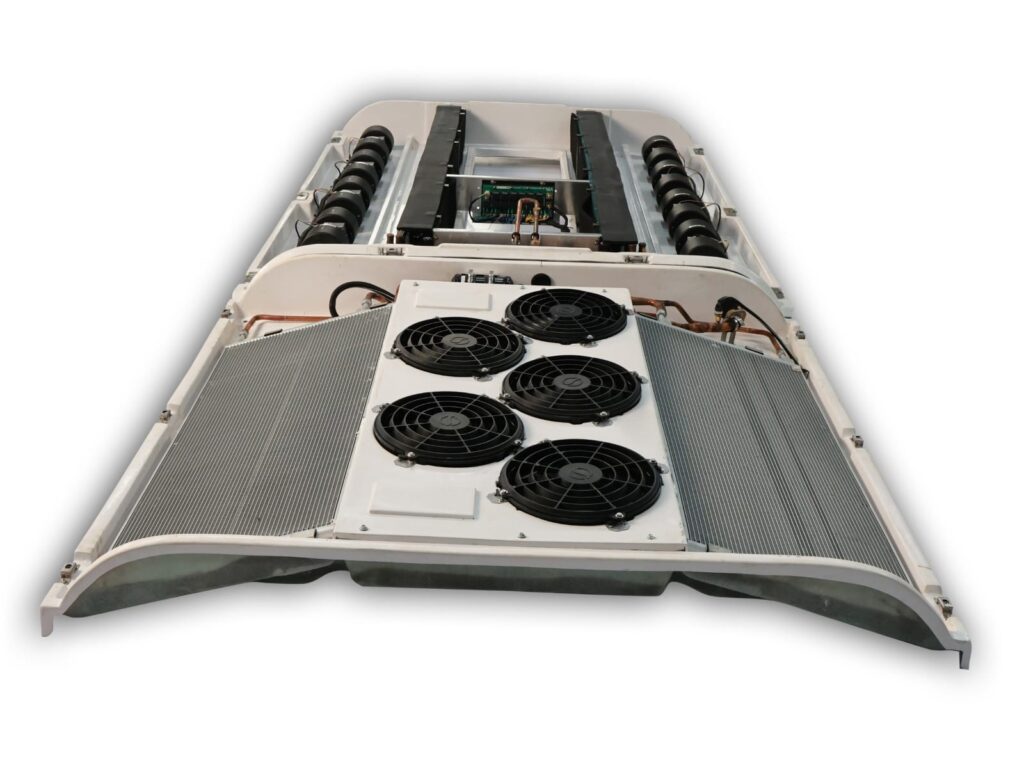
The condenser dissipates the absorbed heat into the surroundings. The fans are used to create an airflow that enables the heat absorbed from the passenger compartment to be released. With the loss of heat, the refrigerant is converted from a vapour into a liquid state.
Expansion
Now that the refrigerant is already in liquid form with a high pressure, it can move to the expansion valve. This component reduces the pressure of the refrigerant. As the pressure decreases, the temperature of the refrigerant becomes lower, which results in the production of a low-pressure, low-temperature refrigerant mixture that will be used for absorption of heat in the bus.
Evaporation
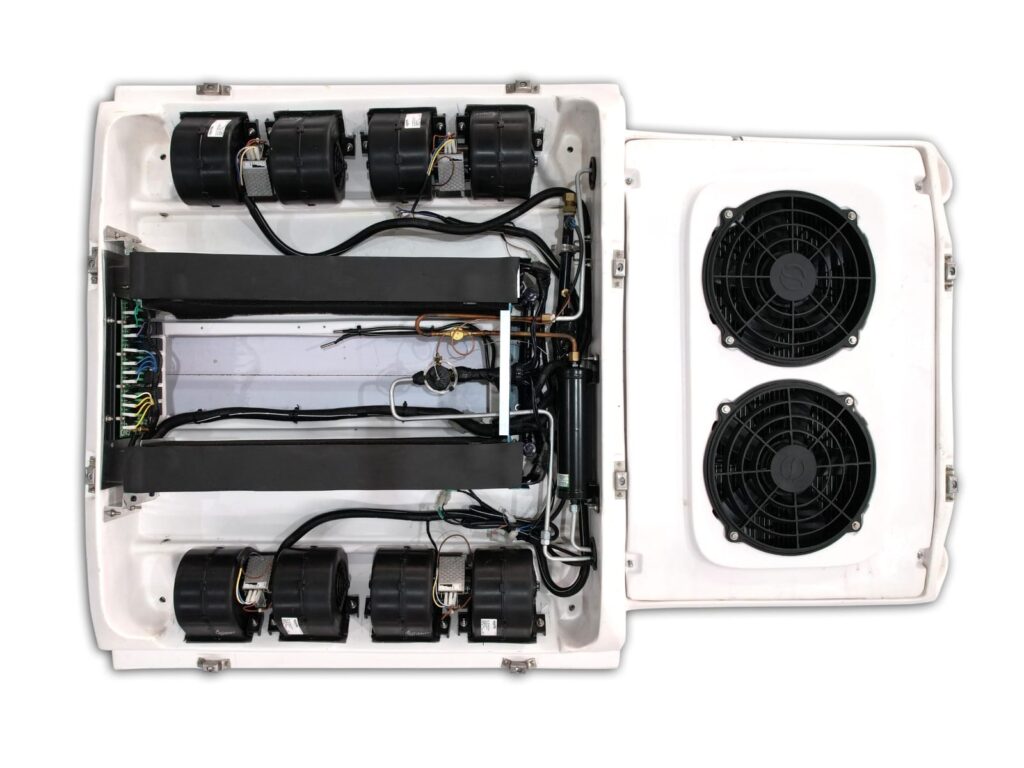
Upon entering the evaporator, the refrigerant is in a cold state. The system uses air blowers to circulate the air, and it moves the air over the evaporator surface. The heat from the air is drawn to the refrigerant, cooling the air before it is fed back into the cabin. In addition, water vapour condenses on the cold surface of the evaporator, resulting in dry air supplied to the cabin. The refrigerant absorbs the heat and changes into vapour at low pressure.
How Air Moves Through a Bus AC System
The refrigeration circuit removes heat, while the delivery of cooled air to the passenger compartment of the bus is accomplished through the air distribution system.
In this process, cabin air is sucked in by the HVAC unit with the help of the blowers. Depending on the design of the particular AC system, fresh outside air may be added to the air already present in the cabin.
The air then gets moved through the evaporator where the process of cooling and dehumidification occurs. Finally, the cooled air is distributed evenly throughout the cabin via ducts, vents, or air outlets.
The objective of the entire process is to achieve a comfortable temperature uniformly throughout the bus.
Conclusion
Bus air conditioning systems consist of cooling units, vents, and electronic controls that serve to control passenger space temperature and air quality. This system’s effectiveness results from the way the components operate in various passenger environments and external weather circumstances. Proper sizing of the equipment, continuous maintenance processes, and efficient regulation will make it possible to attain effective and pleasant cooling in different vehicle conditions.