
Electric buses are becoming a mainstream part of modern-day public transit systems. Battery efficiency is an essential contributor to these buses’ performance. It influences the vehicle range and other aspects as well. The way batteries are cooled is critical for optimal battery operation. The battery liquid cooling system is a reliable mechanism for maintaining the battery at the proper temperature range. By regularly removing excess heat created during vehicle operation, this system extends the battery’s life.
Impact of Heat on Battery
Battery pack is the heart of any electric bus, whether it is a mini traveller or a big luxury tourist bus. When the battery is being discharged or the vehicle accelerates, the cells within the battery generate heat. In regions where the ambient temperature is extreme, the battery degrades sooner. It takes longer to charge and requires more maintenance. Therefore, a system that maintains the battery temperature in the right range becomes essential to install.
How Battery Cooling System Works
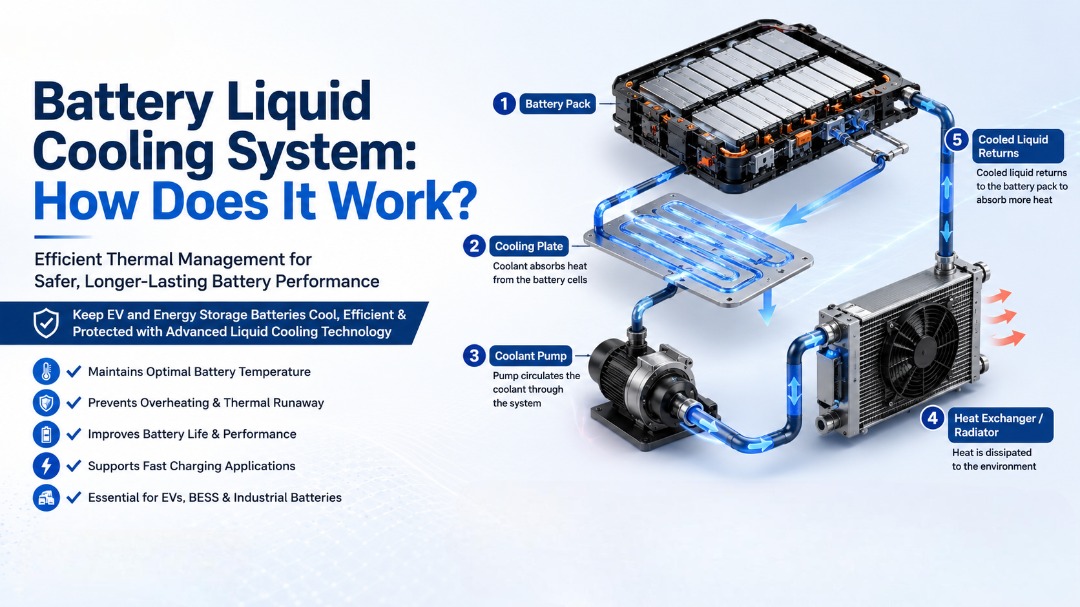
The battery liquid cooling system has cooling plates, coolant circulation pump, heat exchanger, chiller, condenser, compressor, temperature sensor, and piping network. Here is how these units work together to maintain the battery’s temperature:
Temperature Sensing
The sensors monitor the temperature and its changes in real time. Based on the operating conditions, it gives signals to the control circuit, which adjusts the flow of coolant.
Absorption By Cooling Plates
Cooling plates are positioned close to the battery modules. Heat from these modules is transferred to the coolant via these plates. The coolant then circulates toward the cooling unit.
Collection of Heat
After absorbing heat from the battery, coolant dumps this heat into the chiller. The chiller extracts heat from the coolant to a refrigerant through a heat exchanger. Temperature of coolant drops, and it is ready to be sent back into the battery pack.
Heat Rejection Outside
The collected heat is rejected through the refrigeration circuit. A compressor converts the low pressure refrigerant into hot pressure vapour, and the condenser removes the heat into the ambient air.
Features of Battery Cooling Pack By KRNSPH
KRNSPH has been a leading supplier of battery liquid cooling systems for electric bus air conditioners. We provide these systems suitable for buses running on the Indian roads. It features:
- Chiller with a high capacity of 10 kW.
- Multi-flow condenser coil and tube.
- Eco-friendly R134a refrigerant.
- Compact roof assembly unit.
- Sight glass with colour indicator.
- Evaporator is plate type for efficient heat exchange.
Conclusion
The quality and durability of a battery in the electric bus air conditioners hugely depend on the temperature it operates in. Liquid cooled batteries are more functional because the coolant here has better heat-absorbing capacity. Thus, keeping the battery temperature under ideal conditions is ensured effectively by a battery liquid cooling system. It absorbs and rejects heat into the air outside the bus. KRNSPH uses lightweight and long-lasting materials so that the overall load on the electric bus is under check.